

As we think about all the United States Presidents who were viewed as being the best, most of us never really think about the 18th President of the United States. And there are many reasons for this. One of the biggest reasons is because the middle of the twentieth century brought about the idea of the “Lost Cause” and that narrative of history is what we consider to be revisionist history. And getting rid of or overwriting that narrative of history has been harder than we care to admit. It was about the early 1900s, around 1920, we start to build a great many monuments to help us to commemorate those who fought and died during the American Civil War. But that was the thing, they wanted to remember the Confederates as well, but what ended up happening is the narrative of history that was given started to make those who fought for the Confederacy into major heroes. At that time, the heroes, the men such as Ulysses S. Grant were made into the enemies.
But if we start for a moment, we learn that Ulysses S. Grant was not his actual name. Ulysses S. Grant was born Hiram Ulysses Grant in a very small community is southwestern Ohio, on April 27, 1822. He was named by drawing names out of a hat, or at least that is the way the story is told. But Grant was not named right away, but rather waited until the whole family could be together, and while there maybe debate about how he actually received his name, there was no doubt that US Grant was not the man to be idle.


Ulysses S. Grant was the oldest son of his parents, Jesse Grant and Hannah Simpson Grant, and he was well cared for. When he was old enough he was sent to the military academy at West Point, in upstate New York. Some would say that he was only so-so in his academic standing, and that might be giving him credit. Out of the 39 cadets of the same class, he finished 21st. However, he excelled in horsemanship which would play a role in the things that he did a few years down the road.
Once graduated, he would eventually serve in the Mexican War. He would serve as quartermaster under the likes of Zachary Taylor and then under Winfield Scott. He would be credited with riding on a horse sideways during the Battle of Monterrey. All during this time he had been writing letter after letter to the woman that he had fallen in love with, Julia Dent. He had met Julia who was the sister of his roommate at West Point, Fred Dent. He had invited Grant to come and spend sometime with his family, who lived a short distance away from Jefferson Barracks, which was where Grant was stationed after graduating from West Point.

Some would argue that Julia and Ulysses would fall in love at first sight, but I am not convinced that this is the case. It took a series of visits before Grant would I believe fall in love. But it was not a very long period of time. There were several things that caused this, and that was the fact that Julia just seemed to fit Grant’s personality. Many would say that Grant was a very quiet individual. He had been a lot like his mother, who had taught many things to Grant, and part of that was to be quiet, and to be more in touch with the feelings that were inside of him.
Grant would eventually learn that he was going to be going to take part in the Mexican-American War. He would do his best to write to Julia on a regular basis. The thing was that Julia would continue to keep their engagement a secret, which took place just before Grant left for the war. Julia’s father would attempt to intervene when he actually learned that the engagement occurred. Colonel Dent, who was a colonel in an honorary way, did not believe that Ulysses was the right one for his daughter. So, between the time that Grant left, and when he came home and begged Julia’s father to let them marry, he would make Julia attend parties and balls, that would match her up with other men.


When the Mexican War was over, Grant made his way back to White Haven, and he had managed to win the favor of Julia’s father, and so, when he arrived back in St. Louis, he would take the time to get married to Julia. As his best man he had future Confederate General James Longstreet. Longstreet would be one who would try to tell Lee that Grant was not to be underestimated.
The wedding would take place in St. Louis proper. And then it would be time for Grant to start to provide for his family. After Grant and Julia got married, Grant would be again assigned to live in a place called Sacket’s Harbor in New York. There he would try to get Julia to live with him. And for a while, even though Grant tried to get Julia to stay with him, she would have issues being away from her family.
It would be after being moved to Oregon Territory to be stationed at Fort Vancouver. It would be there that a questionable issue would arise, and some say that he was drunk on duty, others say that it was just the fact that he was away from Julia which drove him to resign from the army and return to St. Louis. It would be there that Grant would attempt to live in a number of different ways, and many of them would fail. He was not a banker or anything else, and in the end, he would turn to cutting and selling firewood on the streets of St. Louis.

It was all of this that was the early years that shaped a lot of Grant’s life. And when all of this eventually failed, Grant would turn to his father, and a new chapter would open up. Grant would try anything and everything, and there being a small rift between Grant and his father, that would cause Jesse Grant to not put all faith in Ulysses, but that is a different story. But for much of his time between his graduation and the outbreak of the War Between the States, that Grant and Julia would make happen.
There are other oddities that take place here. Some would say the biggest rift between Ulysses and his father was that Jesse was an ardent abolitionist, and believed very strongly that slavery was wrong. Julia’s father owned several slaves, and this was a bone of contention between the two men, and often it spilled over into the life that Ulysses was living. One of the things that Julia’s father had done was for their marriage he gave them some slaves.
Was this a slap in the face of Jesse Grant, and would Grant actually keep the slaves? It would turn out, that when Grant decides to move from St. Louis to Galena, which happened to be crossing into a free state, Grant would actually manumit (give freedom to) his slaves, but instead of letting them just drift off and find their own work, Ulysses would be the one who would go onto hire them to be servants in the home.
But for the most part, there was this life that Ulysses lived in St. Louis, and it was Julia who would make Grant into the man that he was. And there was no doubt in the mind of those who would come to know Grant that he was a man who needed the love and support of Julia in order to reach the potential that he would.
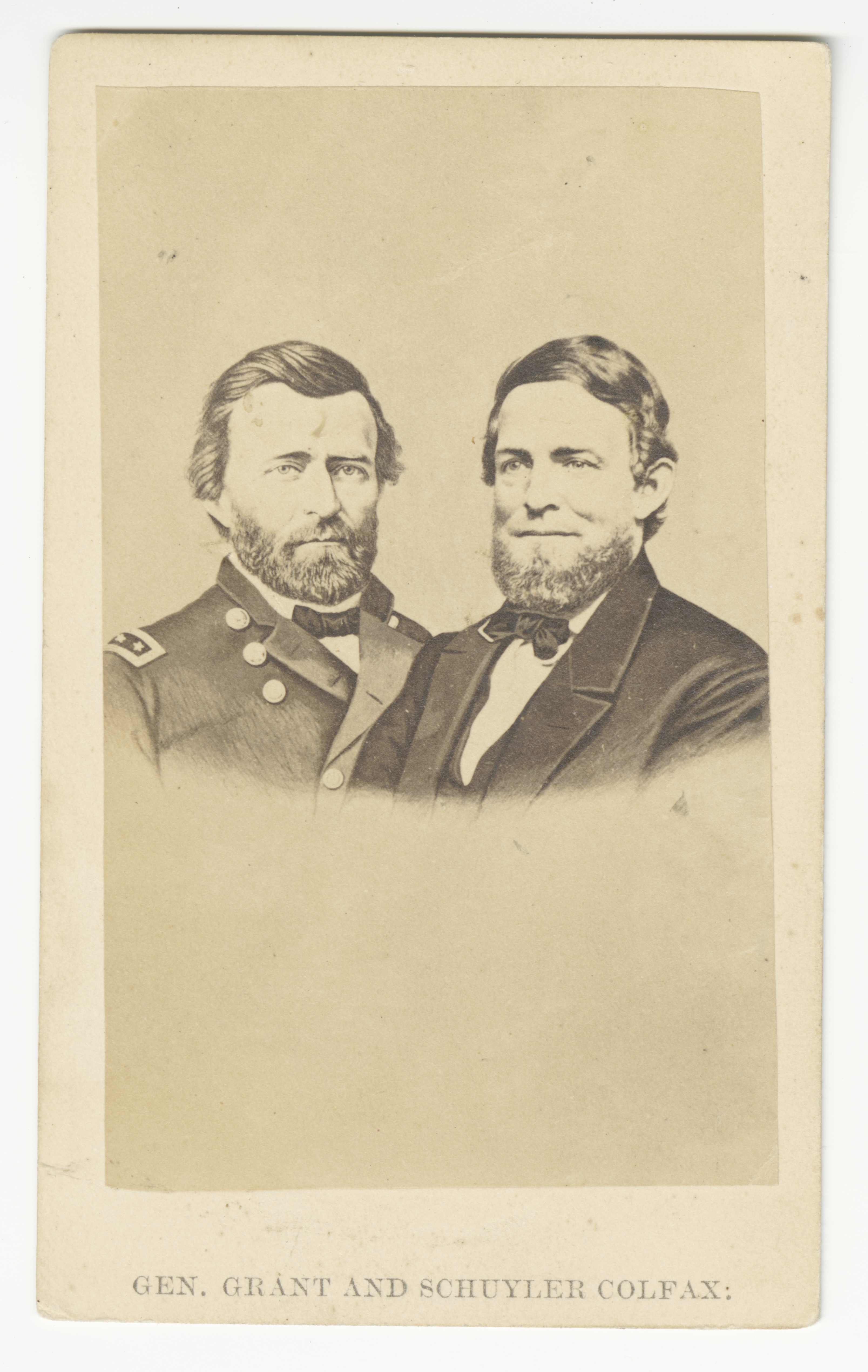
Up until the 1920s Ulysses S. Grant, however, would have been seen as one of the greatest president’s this nation had ever seen. He easily wins the two terms in office that he has, and he, after traveling the world, there was a chance that Grant might have run for a third term, and he was nominated in the election cycle when James Garfield became President. While Grant had not been the one to run for President of the United States for a third term, though he was unsure of the run anyway.
So, what happened to Grant, why did he seem to disappear into the wasteland, so to speak. Well, that has to do with the people who were writing narrative history during the midway point in the twentieth century. They started to make Grant into the villain of the Civil War, and that meant painting him to be Grant the Butcher. And while he had a higher casualty rate than Robert E. Lee did, but the thing was, Grant made it clear that there was no way he was going to be able to lose the men that he was losing during the campaigns that Grant was leading.
So, as we see, the way that history is decided and interpreted, as time passes. Still, it is believed that Ulysses S. Grant is probably one of the most beloved presidents the United States has had.
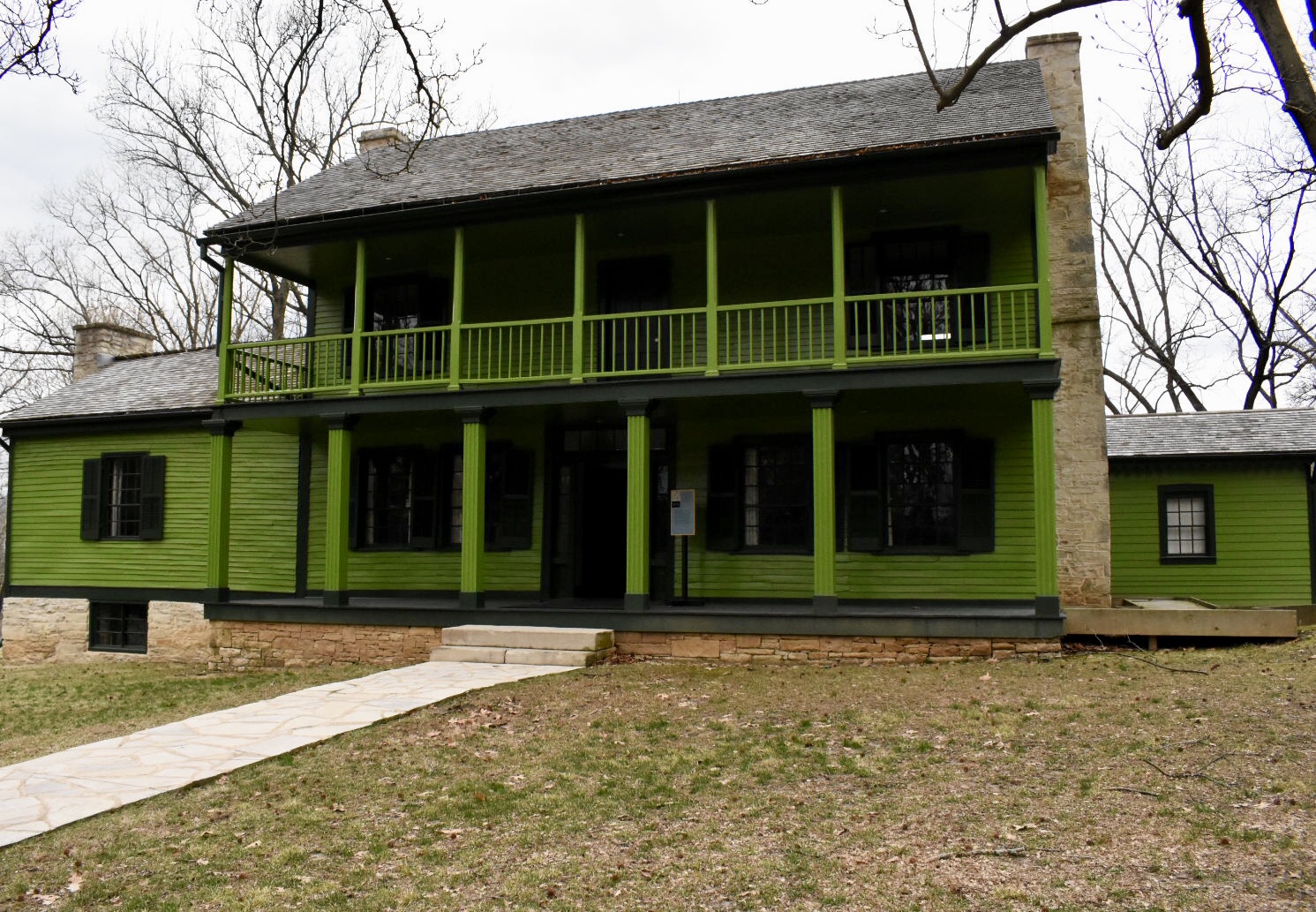
Stay tuned for a follow up blog post, where we will talk some further on US Grant and some of the peculiarities. But for now, if you get to the great city of St. Louis, by all means take the time to stop in at the Ulysses S. Grant National Historic Site. It is located not far from Jefferson Barracks, which is an active military site. And there is also the national cemetery there at Jefferson Barracks. It is all worth the visit.
Hope y’all enjoyed.