
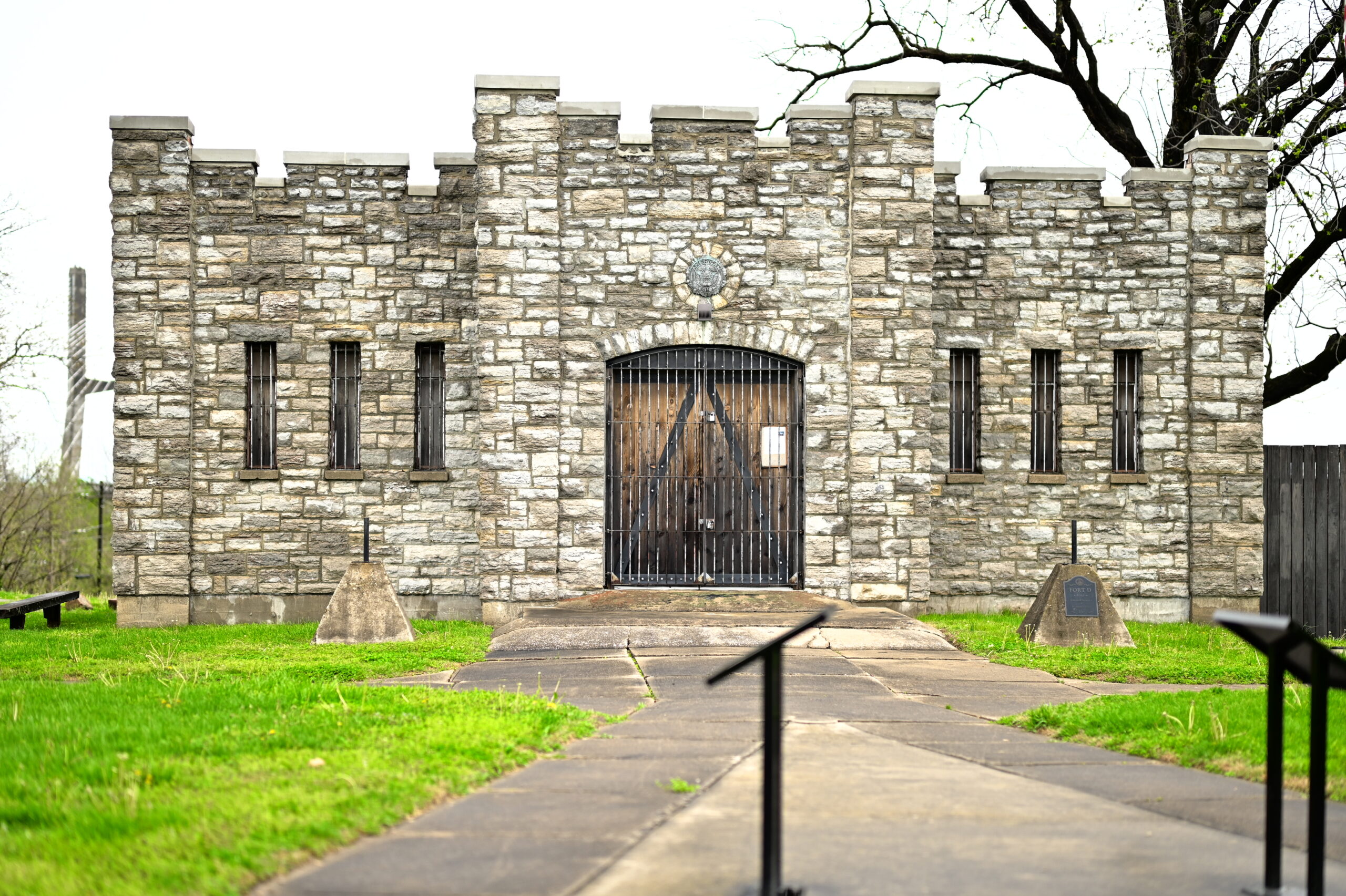
There on the banks of the Mississippi River, right where I was told it was going to be, not far from the bridge that crossed the Mississippi from Cape Girardeau into the Illinois countryside, not far from the small town of Thebes, Illinois, was this fort. It was there, at a small country church, in Thebes, where I talked to one of the nicest people I have ever met, and she was quick to tell me that there were all sorts of things, dotting the countryside, and that I should check them out.
It had been 25+ years ago, when I had met her, and it had been just as long, since the last time I had thought about it. But that was the thing, something put it on my mind. It was something that I had seen advertised, as I was doomscrolling on the internet, and there it was, a reminder that there were all sorts of things to check out. Maybe it was the fact that over the years I had always remained curious about the events that took place in the Midwest, especially when it came to discussion of all things Civil War.

It was not something that I thought about 25+ years ago, mostly because as I went out, and I tried to learn more and more about the area in which I lived, that is when these locations became kind of important to me. I had spent several years trying to find the things that were important to me, but that was the thing, I knew that there were so many people out there who are doing these reels, but they often spend 2 minutes talking, and there is nothing to learn about the actual place being talked about. That is not what I wanted.
It was August, 1861, that was when the fort construction started. The fort was built for the Union army, by the army. Under the leadership, originally, of John C. Fremont, who was in charge of the Western Theater of the war. Many believed at first that this might not be a necessity, that there might not be the hostile reach into Missouri, but that was the thing, Fremont could see the need. He ordered the building of five forts in the Cape Girardeau area. They were to protect the city from encroachment by the Confederate Army, or those who were in those areas.
John Wesley Powell, was the man who was tasked to make sure that the forts were erected in a timely manner. This was a roaring success, and no one thought any different about the forts being there. As Fremont was removed from the command, essentially after he took the liberty to declare free the slaves who lived in the State of Missouri, Lincoln felt that Fremont had overstepped, and when Fremont refused to retract the order, Fremont was then removed from command and the order was rescinded.

However, when the original plans came, after the landing of the 20th Illinois Volunteers landed, there was much discussion on the actual need of the forts that would eventually be built. It was under the command of C. Carol Marsh was the first of these forts to be built. It was built on Windmill Hill, and was called Fort A. This was the start of the fortifications that were built.
Those who were helping to build these forts were often German immigrants. They found a way that they would be able to for the present time make money from helping the Union Army, and push back the secessionist supporters and keep them from entering the city of Cape Girardeau. But were the forts really something that were going to present an actual barrier to those who wanted to get word to anyone loyal to the Confederate cause.
All of this was information that my friend had given me many years ago. I knew that the area had a history, and that the history was something I really wanted to learn about, but that was the thing, often when we were down there, to have an appointment, we often did not have the time, or the ability to go and visit the sites that were not more than a few minutes off our intended course. But still, while I knew that these sites were there, I had placed them in the back of my mind, hoping that there would be time to get to them later.

So, as I have taken the time to learn more about these fortifications that were built, there are times when someone might say, “That’s all there is to them? They are nothing more than dirt mounds?” It is clear to me that they are not seeing the same thing I am. Those mounds of dirt, they were put there to protect a small band of men, the kind of men who would go out of their way to protect a city from the kind of men who would seek to destroy that same city.
While there are some, who study, the Civil War for years, we need to recognize that there is this default setting in most of the history classes in which I was taught, and many still are taught, that the Civil War happened out East, not far from Richmond, Virginia. It is true, there was a lot of fighting that took place out there, but there were battles and skirmishes that took place all over the country.
One time I heard someone say that the American Civil War was nothing but birth pangs for a nation that was still not fully developed. I believe this to be the truth, that there is a need for people to know that, while there was a war, the need for such a war was dependent on the idea of this notion of freedom. It is not just that there was a group of “ragtag soldiers” it was the fact that there was this one thing that had the two sides ready to fight. And that one topic was slavery.
While many have said that they think that the American Civil War, was a war about saving the Union, or they thought it was a war over northern aggression, or state’s rights. But I can tell you, after hours of pouring over the documents that brought about the development of the Confederate States of America(CSA) that the bulk of the argument, whether it was from the North not wanting to allow slavery to expand, or whether it was the South wanting to extend slavery into the West, we have a war which was indeed fought over slavery. There is nothing inherently wrong with us saying that it is a war over slavery, but there are some out there who want to believe that enslaved people were happy with their enslavement, but the question is, and I know deep down, that people know this, that there was no one who was enslaved who liked enslavement, regardless of whether the master was kind or not.
I bring this up, because there is a faction of people in this nation, who are trying to codify this idea that teaching kids the truth about our history, is teaching them to “hate” this nation, but that is not the case. We need to quit ignoring history, and as you read the blog that I am sharing, I want you to know, I am not here trying to skew the facts, or blur the lines, but rather I am here trying my best to share the facts about different locations that do not necessarily get the headlines on a daily basis. We need to know, this is how this particular location fits into the bigger picture of history.
Take for granted the site of this Historic Fort D. We have remnants of a fort that was built in 1861, in order to protect a community and the people of that community from a violent end. It is quite clear that there are plenty of people who would ignore this place, or maybe it is in their backyard, and there they are, not fully ready to wrestle with the fact that there were people who would have fought the others to death, if that was what it took to save those who lived in the city. What was it that caused the men who joined the 20th Illinois Volunteers to join? Do you think that they had no clue what they were fighting for, and why they were fighting when they signed up? There was no one who signed up, who had not already made their mind up where they stood on the slavery question. This is important, because these men left homes, families, careers and so much more, all in an effort to assure the people of an area that they would do what they could, but not only that, they came with their mind made up about what they were fighting for.
Perhaps down the line we will explore the topic of the “Lost Cause” myth. I can tell you, I was exposed to it a great deal, as I was growing up, and I can tell you, it is easy to get wrapped up in it, even if you did not agree with it.
For now, if you ever get to Cape Girardeau, take the time to explore some of the historic sites that are offered to you for free, you might learn a great deal about the people who lived all those years ago.